.png)

.png)
The Last Mile of Lending: How Digital Infrastructure Closes the Access Gap

Get In Touch
Heading 1
Heading 2
Heading 3
Heading 4
Heading 5
Heading 6
Lorem ipsum dolor sit amet, consectetur adipiscing elit, sed do eiusmod tempor incididunt ut labore et dolore magna aliqua. Ut enim ad minim veniam, quis nostrud exercitation ullamco laboris nisi ut aliquip ex ea commodo consequat. Duis aute irure dolor in reprehenderit in voluptate velit esse cillum dolore eu fugiat nulla pariatur.
Block quote
Ordered list
- Item 1
- Item 2
- Item 3
Unordered list
- Item A
- Item B
- Item C
Bold text
Emphasis
Superscript
Subscript
Modern lending is often described as a technology problem. Build a faster algorithm, reduce friction at onboarding, automate underwriting, and the rest follows. Yet The PayOff — Gottfried Leibbrandt and Natasha forensic account of the global payments revolution — makes a quieter, more disruptive argument: the most consequential changes in lending are not happening in the algorithm layer. They are happening in the infrastructure layer. And that distinction changes everything about how lenders should think about scale, access, and risk.
Leibbrandt spent two decades as CEO of SWIFT, the interbank messaging system that sits invisibly behind every wire transfer, every settlement, every cross-border disbursement. He is not a fintech enthusiast writing from the outside. He is an engineer of the old system watching it be reinterpreted — with the rare clarityof someone who knows both what is being disrupted and what cannot be disrupted at all.
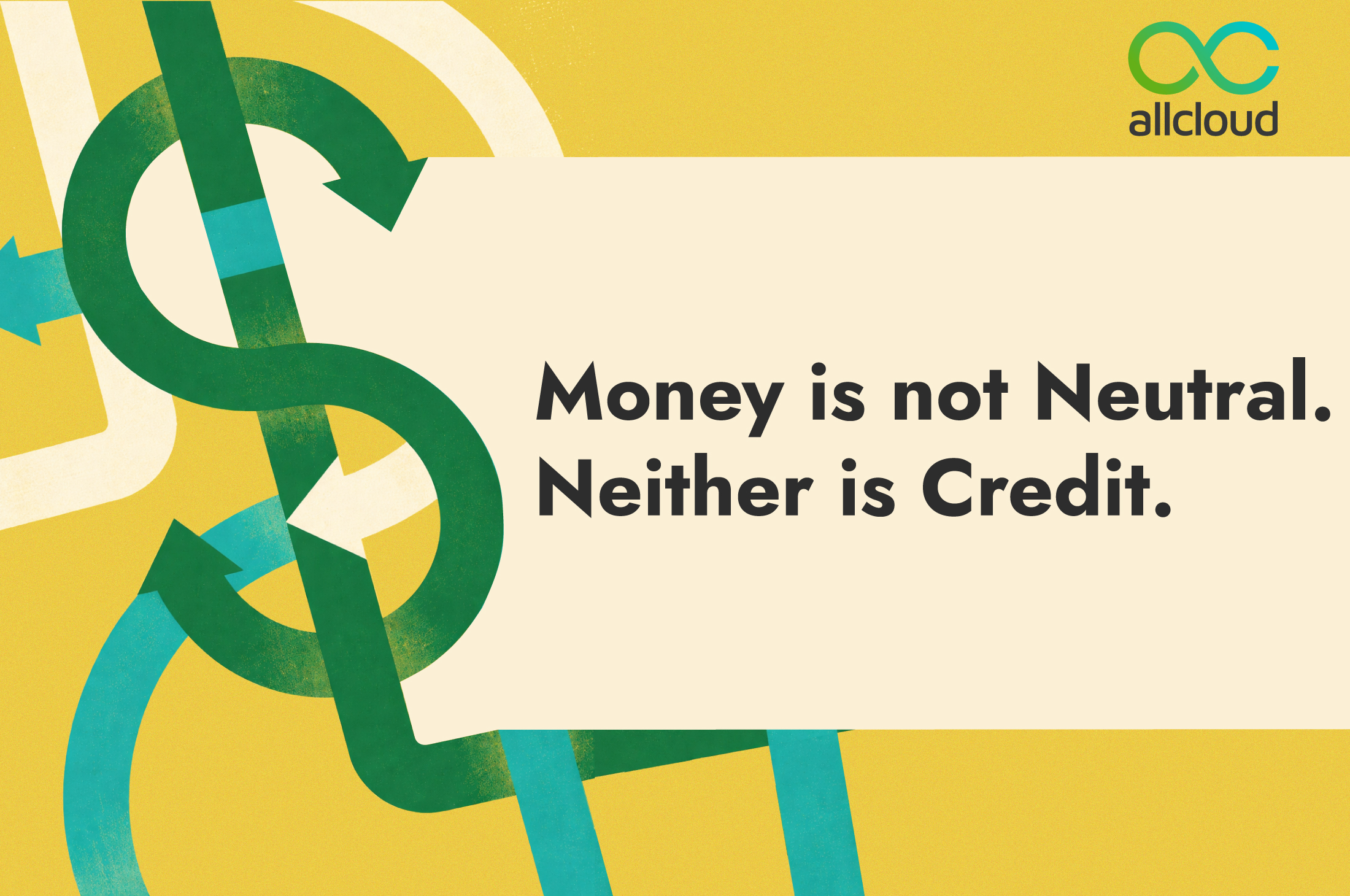
InfrastructureIs Not Neutral
The first lesson of The PayOff for lenders is that infrastructure is not a neutral foundation — it is a gate keeping mechanism. The architecture of the traditional banking system was designed for a world of branches, paper, and physical verification. That architecture made it efficient for certain borrowers (salaried, urban, document-rich) and systematically expensive or inaccessible for others (informal workers, rural MSMEs, first-generation borrowers).
What digital payments infrastructure has done — from UPI in India to M-Pesa in Kenya to GCash in the Philippines — is not replace that architecture. It has created a parallel access layer that sits above the same underlying pipes. And in doing so, it has shifted the central question of credit from "does this borrower qualify?" to "does this borrower exist within our infrastructure?"
This is a profound reframe.
1. An NBFC using traditional underwriting asks: does this applicant have a credit bureau score, a bank statement, a balance sheet?
2. A lender operating within new infrastructure asks: does this applicant have a transaction history, a mobile wallet, a UPI flow?
The risk assessment is equally rigorous. The population it serves is completely different.


Data as the New Collateral
The PayOff's most important insight for lenders is this: in a digitally instrumented credit environment, data does not merely support the lending decision — it replaces collateral. The borrower who has twelve months of GST filing history, regularutility payments, and a consistent UPI transaction pattern is, from the lender's perspective, already partially underwritten. The loan is not a leap of faith; it is the extension of a relationship that the infrastructure has been quietly documented.
This connects to a deeper point about fairness that we explored in our earlier post on themoral foundations of credit. Trust, as E.P. Thompson's moral economy lens reminds us, is not manufactured through contracts — it is accumulated through consistent, transparent economic behaviour. What digital infrastructure now enables is the systematic capture of that behaviour at scale. For the first time, a kirana store owner's repayment reliability can be demonstrated not through a balance sheet, but through a GST return and a year of Razorpay settlements.
The Speed Problem Returns
There is, however, a tension at the heart of digital lending that The PayOff treats with unusual honesty. Speed is both the competitive advantage and the primary risk vector of digitally embedded credit. When a borrower can apply, get approved, and receive funds in four minutes — the same cognitive shortcuts that Daniel Kahneman describes in Thinking, Fast and Slow begin to dominate both sides of the transaction.
As we explored in our post on the two systems of credit decisions, System 1 thinking — fast, intuitive, emotionally driven — governs decisions made under time pressure or inconditions of high friction. A frictionless digital lending interface does note liminate cognitive bias. It accelerates it. A borrower tapping "confirm"on a buy-now-pay-later screen at the point of purchase is not engaging slow, analytical deliberation about repayment capacity. The interface is designed specifically to prevent that deliberation.
For lenders,the equivalent risk operates at the portfolio level. When origination velocityis high, the signals that would trigger System 2 review — anomalous income patterns, mismatched stated purpose and transaction behaviour, unusual application timing — can be buried under approval volume. The infrastructure that enables speed must also be designed to insert the right friction at the right moment. Algorithmic decisioning without deliberate review thresholds is not faster underwriting. It is deferred risk.
The Leap frog Lesson for Indian Lending
One of the most striking arguments in The PayOff is the observation that markets which skipped the old infrastructure were not disadvantaged — they were freed. India's UPI ecosystem, built without the legacy constraints of cheque-clearing infrastructure and branch-based verification, has created a credit data common that incumbent banking systems in advanced economies are only beginning to approximate. The Jan Dhan-Aadhaar-Mobile stack has brought hundreds of millions of borrowers into a documentable financial identity — not because it replicated old infrastructure, but because it built new infrastructure for a different purpose.
For NBFCs and emerging lenders in India, this is both an opportunity and an obligation. The infrastructure exists to serve borrower segments — informal workers, agricultural households, micro-enterprises — that traditional underwriting consistently failed. The question is not whether data is available. It is whether lenders are building credit models calibrated to read that data accurately, and whether servicing workflows are designed to support borrowers for whom the experience of formal credit is genuinely new.
.svg)