.png)
.png)

The Social Life of Credit: Why Lending Is More Than Numbers on a Screen?

Get In Touch
Heading 1
Heading 2
Heading 3
Heading 4
Heading 5
Heading 6
Lorem ipsum dolor sit amet, consectetur adipiscing elit, sed do eiusmod tempor incididunt ut labore et dolore magna aliqua. Ut enim ad minim veniam, quis nostrud exercitation ullamco laboris nisi ut aliquip ex ea commodo consequat. Duis aute irure dolor in reprehenderit in voluptate velit esse cillum dolore eu fugiat nulla pariatur.
Block quote
Ordered list
- Item 1
- Item 2
- Item 3
Unordered list
- Item A
- Item B
- Item C
Bold text
Emphasis
Superscript
Subscript
In The Social Life of Money, sociologist Nigel Dodd challenges one of the most deeply held assumptions in finance: that money is neutral. He argues that money is not just a unit of account or a medium of exchange—it is a social relationship. It carries meaning, power, obligation, trust, and emotion. How money is given, owed, repaid, or withheld shapes human behavior far more than interest rates or formulas ever could.
For lending, this insight is foundational. Credit is often treated as a technical construct—principal, tenure, EMI, collateral. But in reality, every loan creates a social contract between lender and borrower. It introduces expectations, anxieties, responsibilities, and moral judgments. Borrowers do not experience loans as spreadsheets. They experience them as pressure, opportunity, dignity, or sometimes fear.
When lending systems ignore this social layer, repayment behavior becomes unpredictable—not because borrowers are irrational, but because the system misunderstands what credit truly represents in their lives. Traditional lending models assume that repayment is a purely economic decision. If capacity exists, repayment should follow. Dodd’s work shows why this assumption repeatedly fails. Borrowers prioritize obligations differently depending on social context.
A loan taken for a family business carries different emotional weight than one taken for consumption. A repayment reminder framed as a threat feels very different from one framed as continuity of trust. Credit, in practice, is embedded in relationships, identity, and perceived fairness.
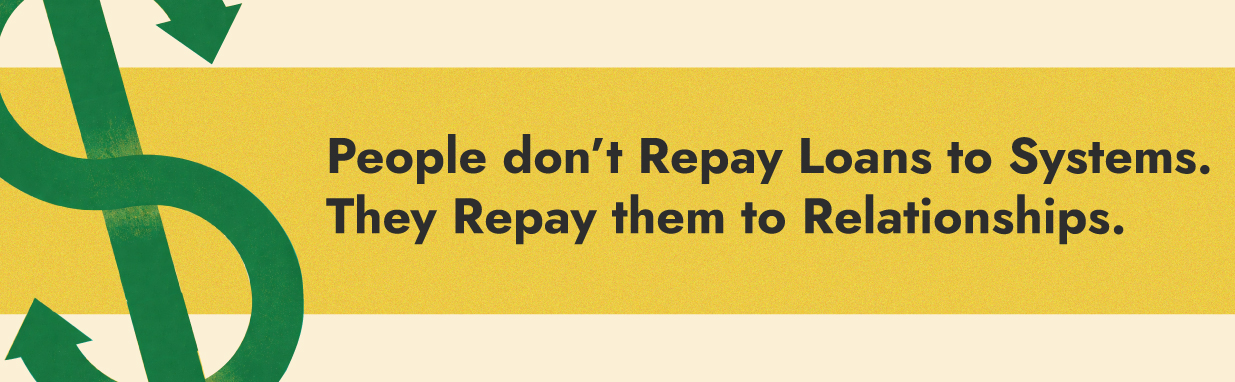

One of Dodd’s central arguments is that money only works because people collectively agree on its meaning. This meaning is reinforced through institutions, norms, and expectations. In lending, this means that repayment discipline is not enforced by contracts alone—it is sustained by legitimacy. Borrowers repay when they believe the system is fair, when expectations are clear, and when the lender’s behavior aligns with social norms of respect and consistency.
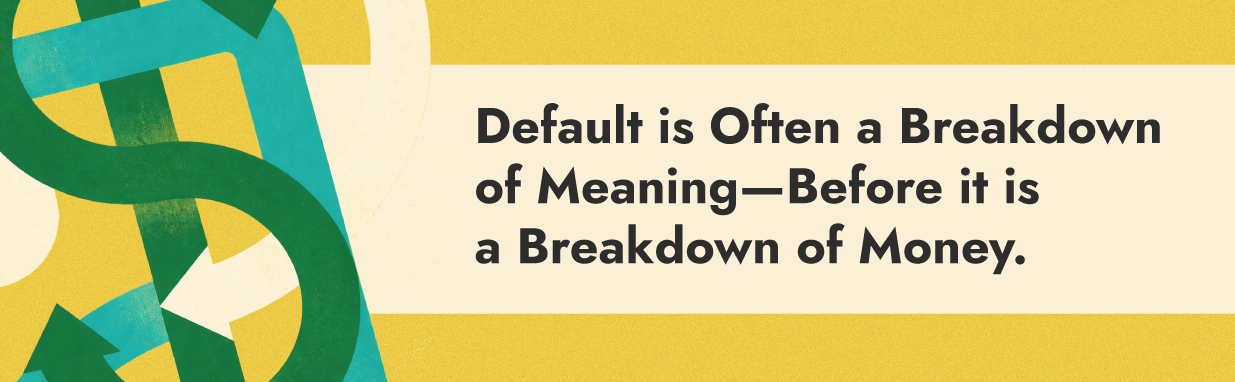
This explains a paradox many lenders encounter. Two borrowers with similar income profiles behave very differently during stress. One communicates, restructures, and eventually repays. The other disengages, delays, or defaults silently. The difference is often not capacity—but perception.
How the loan was explained. How the lender behaved when things went wrong. Whether the borrower felt seen as a partner or processed as a number.
In India especially, credit has deep social meaning. Borrowing is often tied to family reputation, community standing, and personal pride. Default carries stigma beyond financial consequence. Yet many digital lending systems flatten this context into automated messages and generic workflows.
The result is friction—not because borrowers reject repayment, but because the system fails to speak the language of obligation and dignity that money carries in real life. Dodd’s work urges institutions to recognize that economic actions are embedded in social frameworks. Applied to lending, this means designing credit journeys that respect borrower identity and intent.
It means recognizing that collections is not just a recovery function—it is a moment where the social contract of credit is tested. When handled poorly, trust breaks. When handled thoughtfully, repayment follows more naturally.
.svg)